 Sintra City Guide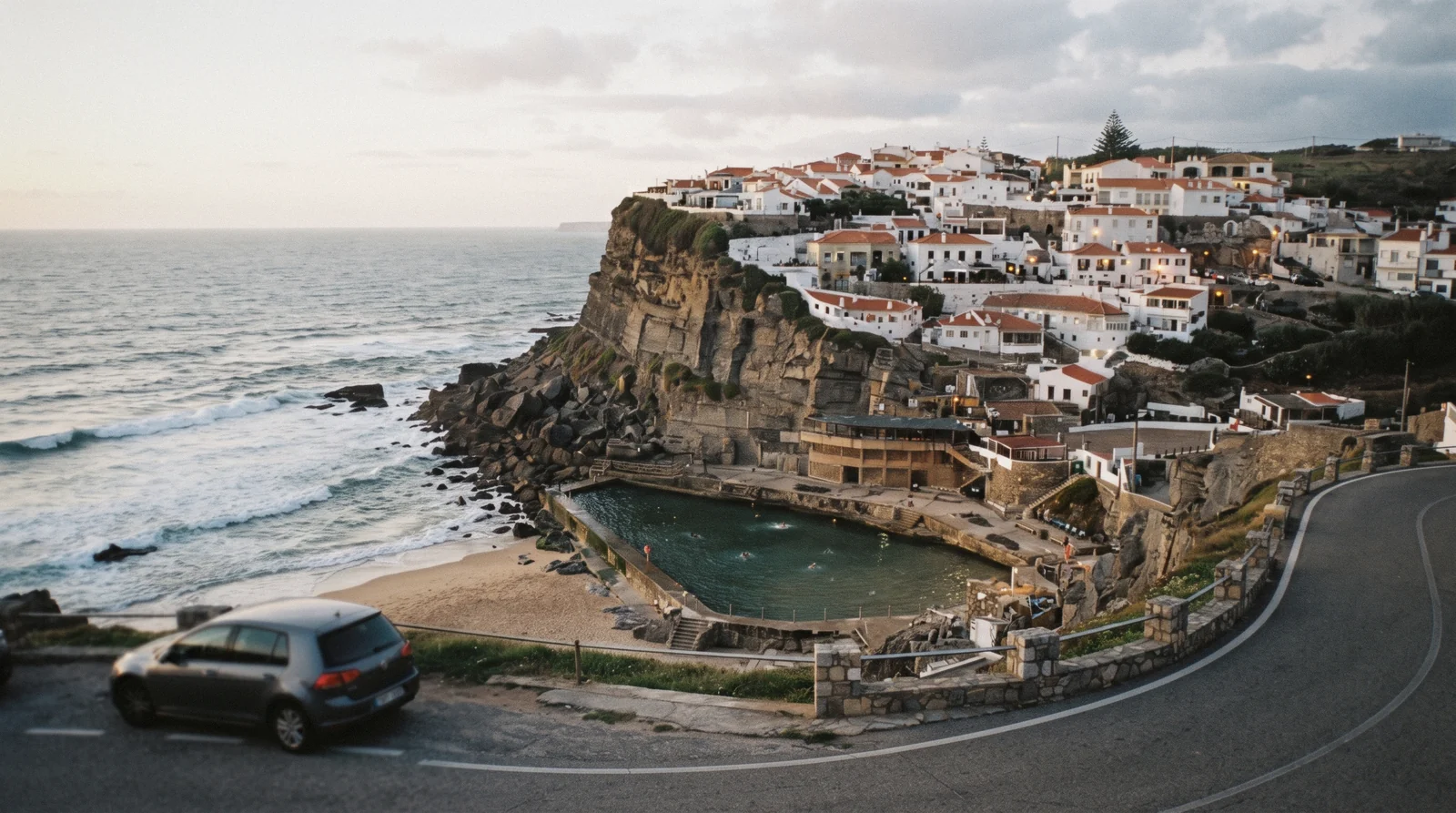
Colares, the Wine Village of Sintra
Colares is a village, a civil parish and a wine region demarcated in 1908 on the coast of Sintra, best known for beaches and for a red wine grown in sand. The village sits between the Sintra-Cascais Natural Park and the Atlantic, a short ride from Azenhas do Mar. This page explains the wine, the Adega, the walking trail and how to get around without a car, with more transport detail in our getting around guide. The palaces and the rest of the day are planned from the the main Sintra planning page.
Quick answer Colares in brief
Colares is a coastal parish of Sintra and one of Portugal's oldest demarcated wine regions, demarcated in 1908. Its vines grow in sand, which kept phylloxera out after 1865, so the Ramisco grape is still grown ungrafted. Tastings are by appointment and the Adega Regional de Colares publishes no tasting price.
Key takeaways
- No tour in our catalogue includes a Colares wine tasting. If you want a full Sintra day with the coast covered, the 8-hour Sintra to Cascais e-bike tour rides through the same countryside.
- The village sits between the vineyards and the sea, close to Azenhas do Mar and the parish beaches.
- Visit the Adega within its opening hours and arrange a tasting ahead of time. Start from how to taste Colares wine.
Colares Wine Producers on Visit Sintra's List
Visit Sintra, the municipality's official tourism site, lists eight Colares wine producers, and its wine routes name a ninth. Every route says to contact the producer in advance.
| Producer | Where | What the listing says | Visit |
|---|---|---|---|
| Adega Beira Mar | Azenhas do Mar | Listed as a Colares wine producer in the village built on the cliff | Not stated |
| Adega Regional de Colares | Colares | Founded 1931, today gathers more than 50% of the region's production and more than 90% of its producers | Contact in advance |
| Baías e Enseadas | Not stated | Listed as a Colares wine producer | Not stated |
| Casal Santa Maria | Not stated | Main house built 1720, survived the 1755 earthquake | Not stated |
| Casca Wines | Not stated | Founded by winemaker Hélder Cunha in 2008 | Not stated |
| Caves Visconde de Salreu | Banzão | Large cellars built 1921, designed by architect Norte Júnior | Not stated |
| Fundação Oriente | Not stated | Bought the largest Colares vineyard, 8 hectares, in 1999 | Not stated |
| Haja Cortezia Wines | Village of Cortesia | From the north of the region | Not stated |
| Adega Viúva Gomes | Almoçageme | Named on wine route 2 | Contact in advance |
Adega Viúva Gomes is not on the producer list but is named on Visit Sintra's wine route 2. Source list: Adegas e Produtores de Vinho de Colares. Opening hours in this guide come from the Adega Regional de Colares' own site. No tasting price is published for any producer on the list. Figures current for in Q3 2026.
Tours Through the Colares Countryside
Be upfront about the gap: no tour listing we track names a Colares wine tasting, and Visit Sintra's wine routes direct you to book directly with producers. What the listings below do offer is time in the same landscape between Sintra, Cabo da Roca and Cascais, by coach or by e-bike.
 from $92.34
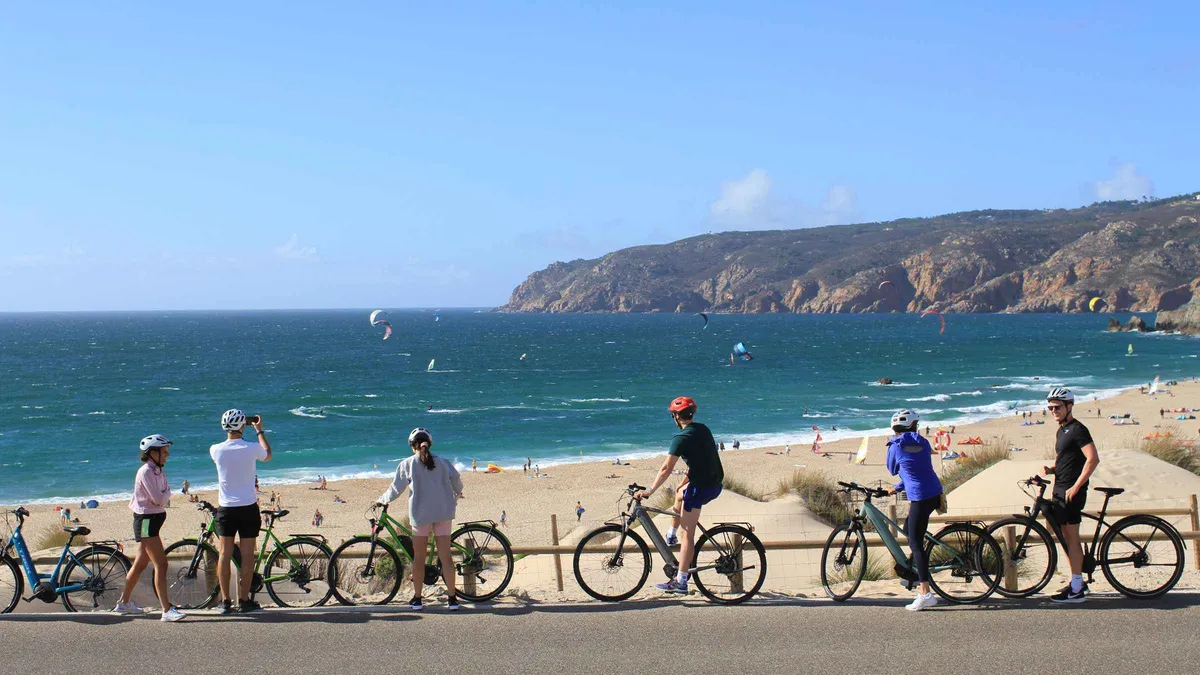
From Lisbon: Sintra to Cascais Full-Day E-Bike Tour
An 8-hour electric-bike tour covering a 40km route from Sintra to Cascais through forests, villages and the coast, with train tickets both ways included and a lunch package for around €20 per person.
Check Availability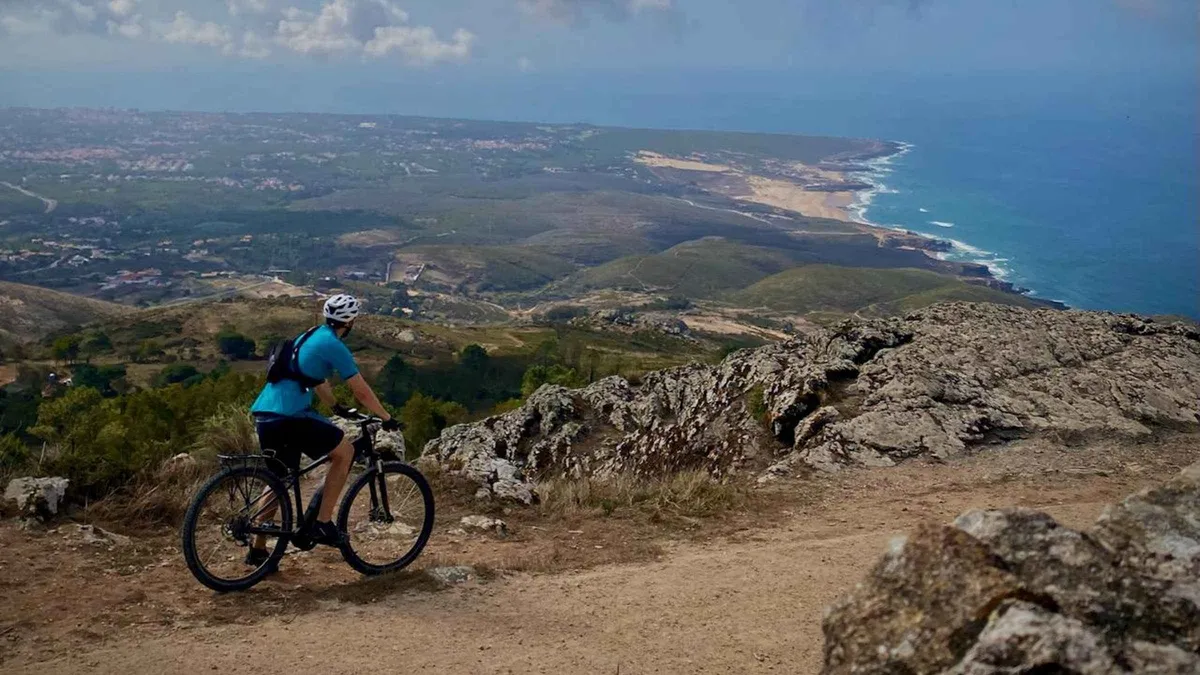 from $98.11
From Cascais: Sintra Guided E-Bike Tour & Guincho Beach
A 4-hour guided e-bike tour from Cascais into Sintra's forest trails, with lunch on Guincho Beach. A reviewer's actual ride ran closer to 6 hours and 25 miles, so it is more workout than a casual pedal.
Check Availability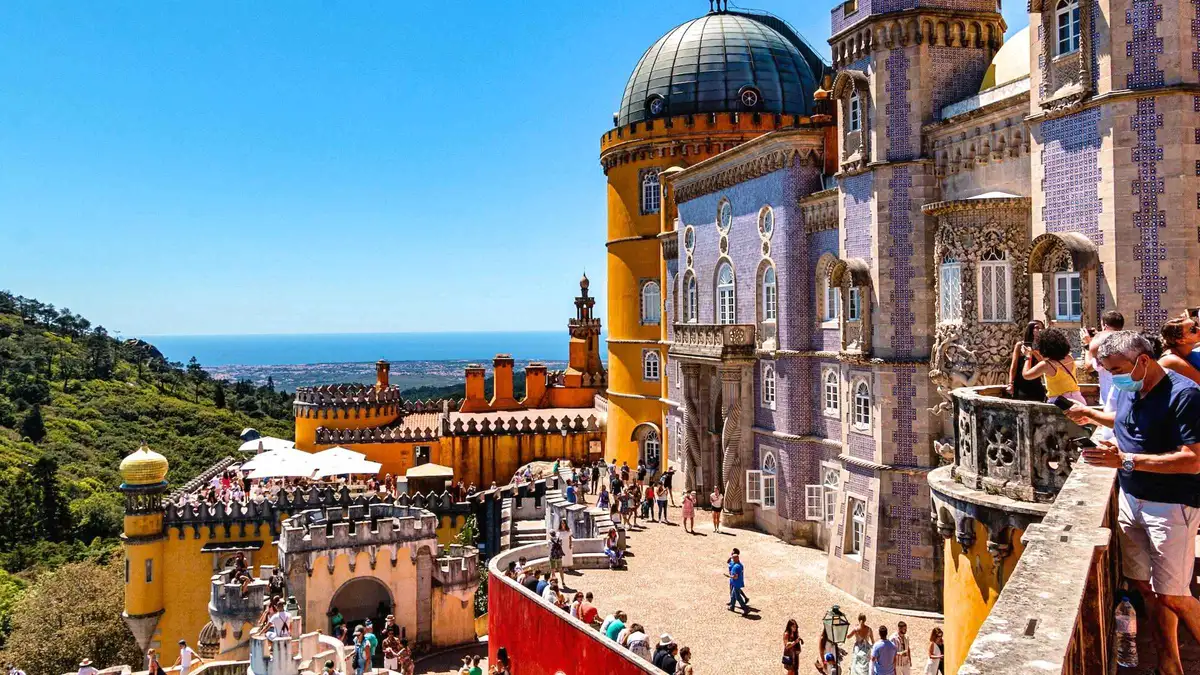 from $27.93
Lisbon: Sintra, Pena, Regaleira, Cabo Roca Coast & Cascais
A 9-hour coach tour from Lisbon covering Sintra, Pena Palace, Quinta da Regaleira, Cabo da Roca and Cascais, with a live guide. Palace and Regaleira entry tickets are only included on the options that state so, so check the option before booking.
Check Availability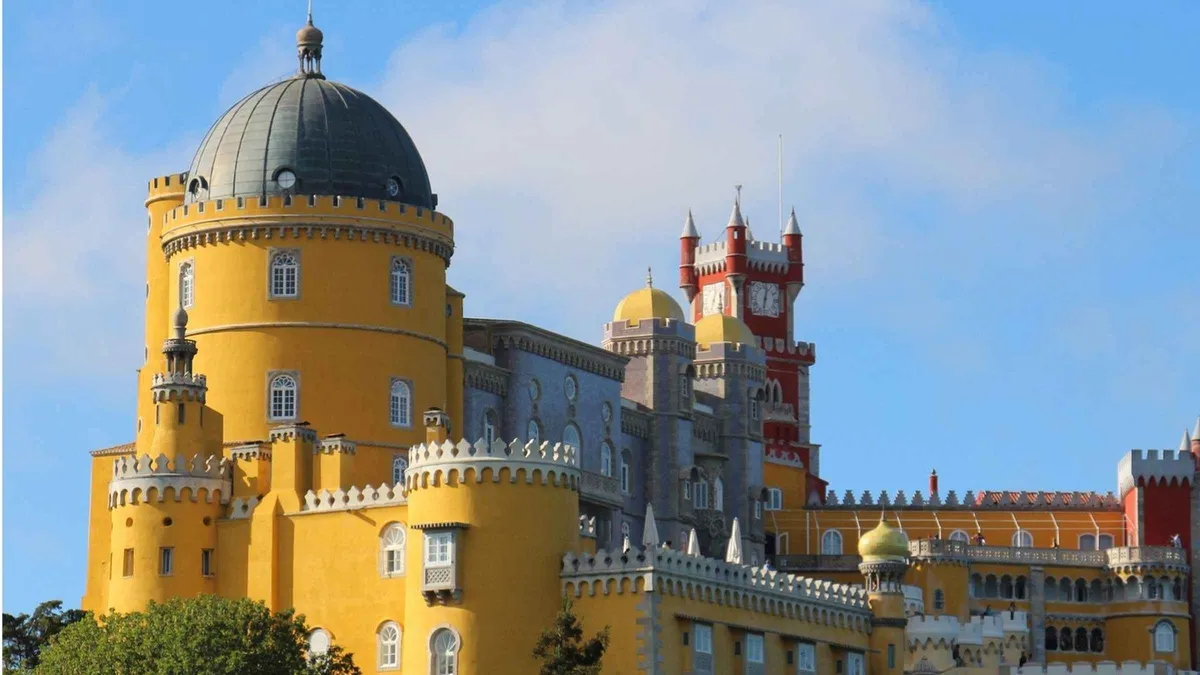 from $27.93
Lisbon: Sintra, Pena, Regaleira & Cabo da Roca & Cascais Coast
A 9.5-hour coach tour from Lisbon to Sintra, Pena Palace, Quinta da Regaleira and Cabo da Roca, with panoramic drive-by views of Guincho Beach, Cascais and Estoril. Entry tickets are included only on the options that state it.
Check AvailabilityPrices, ratings and details are the platform's own. dollar figures are the listed prices — the platform bills in your account's currency.
What Colares Is: A Parish, a Village and a Wine Region
Three things share the name Colares, and travellers often mix them up.
A Civil Parish of Sintra
Colares is one of the civil parishes of Sintra municipality, stretching from the foot of the Serra down to the Atlantic. Several famous places you may already have on your list actually sit inside it. Cabo da Roca, the westernmost point of mainland Europe, lies in Colares parish.
So do most of Sintra's best-known beaches: Praia da Adraga, Azenhas do Mar, Praia das Maçãs, Praia Grande and Praia Pequena all carry Colares postcodes, such as 2705-351 for the village itself. The parish is part of the Sintra-Cascais Natural Park coastal belt.
A Village With a Foral From 1516
The village has old administrative roots: Manuel I granted Colares its foral, its town charter, on 10 November 1516. In 1385, after the Battle of Aljubarrota, João I gave the town to the Constable Nuno Álvares Pereira. Today the cooperative winery and its bus stop are the practical centre for a visitor.
Visit Sintra's suggested itineraries pair the village with the Eléctrico de Sintra and Praia das Maçãs in a single day trip from the historic centre.
A Demarcated Wine Region
Colares is also the name of one of Portugal's oldest demarcated wine regions, demarcated in 1908 and described by the regional commission as the westernmost wine-growing region in continental Europe. The DOC area covers three parishes, all within Sintra municipality: Colares, São Martinho and São João das Lampas. The wine carries the same name as the village, and the Adega Regional de Colares at Alameda Coronel Linhares de Lima 32, 2705-351 Colares, is its cooperative heart.
- Parish: Colares, in Sintra municipality
- Region demarcated: 1908, by the Carta de Lei of 1908
- DOC parishes: Colares, São Martinho, São João das Lampas
- Adega address: Alameda Coronel Linhares de Lima 32, 2705-351 Colares
What About Restaurants
People search for Colares Portugal restaurants, and we have to be honest about the sources. Visit Sintra's wine routes do mention lunch in Colares and lunch at Praia das Maçãs as route stops, but our independent guide does not review or recommend individual restaurants, and the official pages we checked name none. Treat the village and the beach settlements as places with food and drink available and verify on the ground or with the Sintra tourist offices.
Why the Vines Grow in Sand
This is the fact that puts Colares on wine maps worldwide: the best vines are planted in loose sand, on purpose.
Phylloxera and the Sand Barrier
From 1865, phylloxera devastated Portugal's vineyards. The insect attacks vine roots, and the standard response everywhere was to graft European vines onto resistant American rootstock. Colares escaped.
Its vineyards sit on 'chão de areia', deep dune sand, and the sand layer between the surface and the clay below kept the insect from reaching the roots. The result is rare in Europe: Ramisco vines still grown ungrafted, 'pé-franco', on their own roots. Visit Sintra's own wine page makes this the centrepiece of the region's story.
The history is set out on Visit Sintra's Vinho de Colares page.
Chão de Areia and Chão Rijo
The region has two sub-zones. 'Chão de areia' is the sandy coastal strip, where the ungrafted vines grow. 'Chão rijo' is the harder ground of limestone and marl soils.
About 80% of the Colares vineyard sits on chão de areia. Near the sea, the vines are protected by windbreaks of woven cane, the 'paliçadas de canas'.
The Ramisco and Malvasia Grapes
Colares DOC wine rests on two varieties: Ramisco for red and Malvasia de Colares for white. Wine-tourism sources report that DOC rules require a minimum 80% of the defining variety, with the remaining 20% from authorised supplementary grapes, João de Santarém, Molar and Parreira-Matias for reds, Arinto, Galego-Dourado and Jampal for whites. The same sources report that Ramisco ripens very late, never before the last week of September, and yields far less than the Malvasia, which is one reason Colares reds are scarce.
- Ramisco: the red grape, grown ungrafted in sand, reported to ripen late with low yields
- Malvasia de Colares: the white grape, the region's other pillar
- Vineyards near the sea: protected by cane windbreaks
- Altitude: roughly 110 m, less than 1 km from the Atlantic, per the regional commission
Colares Wine in Dated Lines
The key dates in the region's recorded history, from official and regional sources.
-
1154
Vines in the first foral
The 1154 foral of Sintra already records vines, per Visit Sintra's wine page.
-
1255
The Reguengo de Colares and its vines
Afonso III grants the Reguengo de Colares to Pedro Miguel and Maria Estevão, who must plant vines in return, per Visit Sintra's wine page.
-
1516
Colares gets its foral
Manuel I granted Colares its town charter on 10 November 1516.
-
1865
Phylloxera arrives
Phylloxera began devastating Portugal's vineyards from 1865. Colares' sandy soils kept the insect out, so its vines never needed American rootstock.
-
1908
Demarcation
The Colares region was demarcated in 1908 by Carta de Lei, one of Portugal's oldest demarcated wine regions.
-
1921
The Banzão cellars
The large cellars of Caves Visconde de Salreu were built in 1921 at Banzão, designed by architect Norte Júnior.
-
1931
The cooperative is founded
Adega Regional de Colares was founded in 1931 and describes itself as Portugal's oldest wine cooperative.
-
1999
Fundação Oriente buys in
Fundação Oriente bought the largest Colares vineyard, 8 hectares, in 1999, per Visit Sintra's producer list.
Sources: Visit Sintra's Vinho de Colares and adegas pages, the regional commission arcolares.com, and the producers' own listings.
How to Taste Colares Wine
The practical core of this page. Tasting Colares wine is possible, but nothing runs on walk-in tourist mechanics.
The Adega Regional de Colares
The cooperative, founded in 1931, gathers more than 50% of the region's production and more than 90% of its producers, so it is the single most practical stop. It opens Monday to Saturday 09:00-12:00 and 14:00-17:00. Mind the midday break, which catches visitors who arrive around lunch.
Its official site offers a guided 'Prova de Vinhos', a wine tasting covering the winery's history and winemaking philosophy. The site publishes no fixed tasting price, and no official page we checked states one. Ask by email or phone when you book.
- Hours: Monday to Saturday 09:00-12:00 and 14:00-17:00
- Closed at midday between the two sessions
- Tasting: guided Prova de Vinhos offered, price not published
- Address: Alameda Coronel Linhares de Lima 32, 2705-351 Colares
Booking With a Producer
Visit Sintra's four wine routes all end at a producer visit and tasting, and each route instructs you to contact the named producer in advance to book. No tasting slot at any Colares producer is listed as bookable online through a central platform on the pages we checked. The reliable sequence is simple: pick a route, contact the producer ahead of your trip, then build the rest of the day around the confirmed time.
| Route | Stops | Producer to contact |
|---|---|---|
| Route 1 | Tram, Adega Regional de Colares, wine tasting, lunch in Colares | Adega Regional de Colares |
| Route 2 | PR8 sand vineyards trail, lunch at Praia das Maçãs, Azenhas do Mar, Almoçageme, tasting, Praia da Adraga, sunset | Adega Viúva Gomes |
| Route 3 | Monserrate, tasting, Cabo da Roca certificate, sunset | Casal de Santa Maria |
| Route 4 | São Miguel de Odrinhas archaeological museum, tasting, sand vineyards, Azenhas do Mar | Ramilo Wines |
What We Cannot Tell You
We will not invent figures. No official page publishes a tasting price for the Adega or for the other producers, so this guide states the gap instead of a number. The same applies to bottle prices at the cellars.
Treat any tasting figure found elsewhere as unverified until the producer confirms it.
Getting to Colares Without a Car
Colares is reachable from Sintra by regular bus, and the historic tram gets you to the coast. Full network detail lives in our getting around guide.
Buses to the Adega
The bus stop you want is 'Av Cel Linhares Lima (Adega Colares)', right by the cooperative, served by Carris Metropolitana lines 1242, 1250 and 1254. Line 1242 runs Casais Cabrela to Almoçageme (Mercado) and stops at the Adega and Praia Maçãs (Mercado). Line 1250 serves Praia Grande.
Line 1254 runs Portela Sintra (Estação Norte) to Magoito (Praia) via the Adega, Praia Grande, Praia Maçãs (Mercado) and Azenhas do Mar. Carris Metropolitana's fare pages do not show a readable single-ticket price for these Sintra-area buses on the pages we checked, so we print no figure.
- Adega stop: Av Cel Linhares Lima (Adega Colares), lines 1242, 1250, 1254
- Line 1248: Portela Sintra (Estação Norte) to Praia Maçãs (Mercado)
- Line 1247: Fontanelas to Portela de Sintra (Estação) via Janas
- Fares: not readable in the operator's published fare pages
The Eléctrico de Sintra
The historic tram runs about 11 km from Vila Alda in Estefânia, Sintra, to Praia das Maçãs, taking about 45 minutes between the Serra and the Atlantic. It is a seasonal service, running in spring and summer. Tickets are always purchased on board, in cash.
The municipality links to a schedule document rather than printing the timetable inline, so we do not reproduce tram fares or departure times here. Check the current schedule in force before you travel.
The PR8 Vinho de Colares Trail
If you want to see the sand vineyards on foot, the municipality has marked a route that does exactly that.
Route Facts
Pequena Rota 8, the Vinho de Colares trail, is a circular route of about 15.5 km starting at the Adega Regional de Colares, GPS 38.805959, -9.450007. It runs through Pinhal da Nazaré and the Ramisco vineyards, then via Fontanelas and Janas. The municipality describes it as almost flat, between pine wood and Atlantic coast, with a cumulative ascent of 280 m.
Like the other municipal Pequenas Rotas it is self-guided, waymarked on the ground, with information panels and a downloadable GPX file. No walking duration is published for this route, only distance and ascent.
- Distance: about 15.5 km, circular
- Start and finish: Adega Regional de Colares
- Cumulative ascent: 280 m
- GPX file: downloadable from the municipal walking page
- Duration: not published
Before You Set Out
One caveat applies. Visit Sintra's walking page carries a notice that, because of continuous adverse weather, the cycling and walking routes in the Serra de Sintra are not available for use for safety, with no reopening date given. Check the municipal walking page close to your travel date before committing a day to PR8.
Our hiking guide covers the other marked routes in the municipality.
From Colares to the Sea
The parish's beaches are a short ride or walk from the village, and they carry their own history.
Praia das Maçãs
Praia das Maçãs takes its name from apples carried by the stream from the orchards, and local legend has autumn river currents carrying apples down to the shore. It was the first Sintra beach to become famous for tourism. A 'casa de pasto', an eating house, was built there in 1888, summer houses followed, and in 1904 the Eléctrico de Sintra got its terminus there.
The beach holds Blue Flag status for the bathing season, and the 2026 bathing season runs 30 May to 13 September with lifeguard assistance ensured at the identified beaches per the Portaria. See our beaches guide.
Azenhas do Mar
The village of Azenhas do Mar sits on the cliff above a beach carved into the rock, with natural seawater pools at the bottom of the valley. It is also a wine address: Adega Beira Mar, one of Visit Sintra's listed Colares producers, is there. At certain tides, sand builds up into a small beach in front of the pools.
No official page publishes exact tide times for the pools. More in our Azenhas do Mar guide.
- Beach address: Escadinhas J. Ramos Baeta, 2705-101 Colares
- Producer on site: Adega Beira Mar
- Viewpoint: Miradouro das Azenhas do Mar on the clifftop
Adraga, Grande and Pequena
Praia da Adraga, at R. da Praia da Adraga, 2765-065 Colares, is described by the official site as one of Sintra's most beautiful beaches, almost wild, with an emblematic stone arch and excellent water quality. It holds Blue Flag status. Praia Grande is the largest beach of the Sintra coastline, a main surf and bodyboard spot that hosts the Bodyboard World Championship each year, with dinosaur footprints preserved in the limestone cliff at its south end, and also holds Blue Flag status.
Praia Pequena next door is more sheltered from north winds. Note that Carris Metropolitana's beach-lines page does not list a bus line for Praia da Adraga. The nearest named stop in the operator's data is Almoçageme (Mercado).
See Praia da Adraga.
Is Colares a Good Base
Some visitors consider sleeping in Colares instead of Sintra town. Here is what the official record supports and what it does not.
What the Official Sources Say
Visit Sintra's accommodation listing gives no official area definitions and no hotel count for Colares, and no municipal page we checked ranks it as a named stay area. Our where to stay page compares the bases around Sintra. We cannot state how many places to sleep the village has, only that the question is decided by what you book.
- No official area definitions for Colares as a stay zone
- No official hotel count published
- Booking decision stays with you, verify directly
Our Reading
Our reading of the geography: Colares works well as a base if your priority is the coast, the tram and the wine, because the buses on lines 1242, 1250 and 1254 link it to both Sintra and the beach strip. It is a quieter proposition than Sintra town, which puts you next to the palaces. That is a judgement about location, not an official classification.
Map of Colares and the Coast
The village, its bus stop by the Adega, the market at Almoçageme and the nearest beaches and landmarks.
Coordinates from Carris Metropolitana's stop API, Visit Sintra beach pages and Wikidata.
Near Colares
Three places that pair naturally with a Colares day.
Azenhas do Mar
The clifftop village above the seawater pools is one of the parish's postcard views and home to Adega Beira Mar. Buses on lines 1242, 1247, 1248 and 1254 serve it per the operator's beach-lines page.
On the Colares coastPraia da Adraga
An almost wild beach with a stone arch, praised on Visit Sintra's own page. It holds Blue Flag status, and no bus line is listed for it, so plan the approach before you set out.
Colares parish coastMonserrate Palace
Parques de Sintra lists Monserrate at $13.84 (€12) for adults, reachable by bus 1253 from Sintra station or 435 per its own access page. It is the start of Visit Sintra's wine route 3.
Sintra side of the hillsColares Questions
What is Colares, Portugal known for?
Colares is known for its wine, grown in sand since before the phylloxera crisis, and for its beaches on the Sintra coast. Cabo da Roca, the westernmost point of mainland Europe, sits in the parish. See what Colares is.
What makes Colares wine special?
About 80% of the vineyard sits on 'chão de areia', loose dune sand over clay, so the Ramisco vines grow ungrafted on their own roots, something phylloxera made rare after 1865. The region was demarcated in 1908 and the wine ages a minimum of 18 months. More in why the vines grow in sand.
Can you visit the Adega Regional de Colares?
Yes, within its opening hours of Monday to Saturday 09:00-12:00 and 14:00-17:00, minding the midday break. The cooperative offers a guided Prova de Vinhos but publishes no tasting price. Details in how to taste.
Do you need to book a Colares wine tasting?
Yes. Visit Sintra's four wine routes all instruct you to contact the named producer in advance to book the visit and tasting. No central online booking for Colares tastings appears on the official pages. See the producer table.
How do you get to Colares from Sintra?
By bus, to the stop 'Av Cel Linhares Lima (Adega Colares)' on Carris Metropolitana lines 1242, 1250 and 1254, or by the seasonal Eléctrico de Sintra tram to Praia das Maçãs, about 11 km and roughly 45 minutes, tickets bought on board in cash. Fares for the buses are not readable in the operator's published pages. Full detail in getting there and our getting around guide.
What does Ramisco mean for Colares wine?
Ramisco is the red grape of the DOC, grown ungrafted in the sand less than 1 km from the Atlantic at about 110 m altitude. Wine-tourism sources report it ripens very late, never before the last week of September, and yields little, which keeps the reds scarce. Read more in the grapes.
Is Colares worth a stop on the way to the beach?
In our reading, yes, if the wine interests you at all, because the Adega, the cane windbreaks in the dunes and the PR8 trail start all sit on the road to Praia das Maçãs and Azenhas do Mar. Pair it with the coast section and the beaches guide.
Colares Wine on Film: Sand Vines and the People Who Make It
Three films on the region's wine: how the ungrafted vines are planted in sand and who still makes Colares.
The Grave That Saved Wine: Why Colares Defied the Apocalypse
Why the sand kept phylloxera out and how the vines are planted.
Video: Hogar de vinosGordon Ramsay Descobre Colares | Hélder Cunha Winemaker
Winemaker Hélder Cunha shows the Colares vineyards.
Video: Hélder Cunha WinemakerDiscover Ramilo Wines from the Colares Region
A look at Ramilo Wines, one of the producers on Visit Sintra's wine route 4.
Video: Opimian Wine Club de vinVideos load from YouTube only when you press play.
Prices, hours and terms are set by the venue or operator and confirmed at checkout.
We may earn a commission if you book through one of our links, at no extra cost to you. Full affiliate disclosure